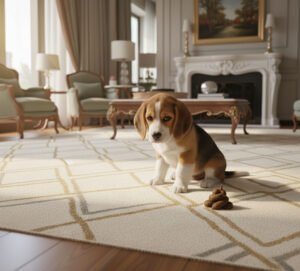
How to Get Dog Pee Out of Carpet: The Complete Guide to Dog Urine Removal
Dog urine accidents are one of the most common carpet problems pet owners face. Whether you’re dealing with a puppy in potty training, an aging dog with incontinence, or a one-time accident, knowing how to properly clean dog pee from carpet can save you from permanent stains and lingering odors. This guide covers everything from emergency response to eliminating old, dried stains.
Table of Contents
Why Dog Pee Smells and Causes Stains
Understanding why dog urine is problematic helps you choose the right cleaning approach:
The Components of Dog Urine
- Urea – Breaks down into ammonia, creating the sharp, unpleasant smell that intensifies as the urine ages
- Uric acid – Forms crystals that bond to carpet fibers and reactivate when humid, causing smell to return
- Urochrome – The yellow pigment responsible for staining
- Bacteria – Grows in urine deposits and produces additional odor compounds
- Hormones/pheromones – Especially in unneutered dogs, these compounds signal to the dog (and others) to mark the same spot
Why the Smell Gets Worse
Fresh dog urine has a mild odor, but as bacteria break down the urea into ammonia, the smell intensifies. The uric acid crystals that form as urine dries are not water-soluble, so they remain in the carpet even after cleaning. These crystals reactivate when exposed to humidity, causing the smell to return on damp days.
What You’ll Need
Essential Supplies for Dog Urine Removal:
- Clean white cloths or paper towels
- Enzymatic pet cleaner
- White vinegar
- Baking soda
- Dish soap
- 3% hydrogen peroxide
- Cold water
- Spray bottle
- UV black light
- Rubber gloves
- Plastic wrap
- Vacuum cleaner
Cleaning Fresh Dog Urine (Act Fast!)
The key to preventing permanent stains and odors is immediate action. Here’s how to clean dog pee from carpet while it’s still fresh:
- Blot immediately
Grab paper towels or a white cloth and blot (don’t rub!) the wet area. Apply pressure to absorb as much urine as possible. Replace with fresh towels and repeat until minimal moisture transfers.
- Stand on the towels
For maximum absorption, place several layers of paper towels over the spot and stand on them for 30 seconds. Your weight helps extract urine from deep in the carpet fibers.
- Apply cold water
Pour a small amount of cold water on the area to dilute remaining urine. Blot again with fresh towels.
- Apply enzymatic cleaner
Spray or pour enzymatic cleaner generously over the entire affected area. The cleaner needs to penetrate everywhere the urine went.
- Let it work
Follow product directions, but typically 10-15 minutes minimum. Don’t let it dry completely.
- Blot excess
Remove excess cleaner with clean cloths.
- Apply baking soda
Sprinkle a layer of baking soda over the damp area to absorb remaining moisture and odor.
- Vacuum
Once the baking soda is completely dry (8-12 hours), vacuum thoroughly.
Pro Tip: The 5-Minute Rule
If you can treat dog urine within 5 minutes of the accident, you have over a 90% chance of complete removal. After an hour, that drops significantly. Speed is your biggest advantage.
Removing Dried or Old Dog Pee
Dried dog urine is harder to remove because uric acid crystals have had time to bond with carpet fibers, and the stain has soaked deeper. Here’s the process:
Step 1: Find All the Stains
Use a UV black light in a dark room to locate all urine stains. Dog urine glows yellow-green under UV light. You may find more stains than you expected—dogs often return to previous accident spots.
Step 2: Rehydrate and Treat
- Dampen the area
Spray the dried stain with plain water or a 50/50 vinegar-water solution. Let it sit for 5 minutes to rehydrate the uric acid crystals.
- Apply enzymatic cleaner liberally
Use more product than you think necessary. Old stains need extra saturation to reach dried crystals deep in the carpet.
- Cover with plastic wrap
This keeps the area moist so enzymes can continue working. Weight down the edges.
- Wait 24-48 hours
Old stains need extended treatment time. Check periodically to ensure it stays damp.
- Remove plastic and blot
Absorb excess moisture with clean cloths.
- Apply baking soda
Let it dry completely, then vacuum.
- Assess and repeat
If odor remains, repeat the entire process.
Why Enzymatic Cleaners Are Essential
Regular household cleaners won’t permanently eliminate dog urine odor. Here’s why enzymatic cleaners are necessary:
How They Work
Enzymatic cleaners contain beneficial bacteria that produce enzymes (protease, lipase, amylase) when they encounter organic matter. These enzymes:
- Break down uric acid crystals at the molecular level
- Digest urea and proteins that cause odor
- Eliminate the compounds dogs use to identify previous marking spots
- Continue working as long as they stay moist
Why Other Cleaners Fail
- Soap and water – Removes surface stain but not uric acid crystals
- Vinegar – Neutralizes ammonia but doesn’t break down uric acid
- Bleach – Can damage carpet and doesn’t eliminate odor-causing compounds
- Carpet shampoo – Cleans surface only; may drive urine deeper into padding
Don’t Mix Products
Using other cleaning products before or with enzymatic cleaner can deactivate the enzymes. If you’ve already used other products, rinse the area thoroughly with water and let it dry before applying enzymatic cleaner.
Effective Home Remedies for Dog Urine
Vinegar and Baking Soda Method
This two-step method can help with mild stains:
- Apply vinegar solution
Mix equal parts white vinegar and water. Spray on the stain and let sit for 5-10 minutes. Blot dry.
- Apply baking soda paste
Once the area is nearly dry, make a paste with 1/4 cup baking soda, 1 tablespoon of 3% hydrogen peroxide, and 1 teaspoon dish soap. Apply to the stain.
- Let it dry
Allow the paste to dry completely (several hours).
- Vacuum
Remove all residue with a vacuum.
Test Hydrogen Peroxide First
Hydrogen peroxide can bleach some carpet colors. Test in a hidden area and wait 24 hours before using on the stain.
Baking Soda Overnight Treatment
For lingering odors after you’ve cleaned the stain:
- Dampen the area slightly with cold water
- Cover generously with baking soda
- Let sit overnight (8-12 hours)
- Vacuum thoroughly
Tackling Stubborn or Repeat Accident Areas
If your dog has repeatedly urinated in the same spot, or if the stain has been there for a long time, standard methods may not be enough.
The Problem with Repeat Accidents
When dogs urinate in the same area multiple times:
- Urine accumulates in carpet padding (which holds 4-5 times more liquid than carpet)
- The subfloor may become contaminated
- Layers of uric acid crystals build up
- The dog continues to smell pheromones that encourage remarking
Heavy-Duty Treatment
- Saturate completely
Use enough enzymatic cleaner to soak through to the padding. This may require significant product.
- Extended dwell time
Cover with plastic and leave for 48-72 hours, adding more cleaner if it starts to dry.
- Extract if possible
If you have a wet vacuum or can rent a carpet extractor, use it to pull out deep contamination.
- Consider padding
For severe contamination, the carpet padding may need to be replaced. A professional can assess this.
When Professional Carpet Cleaning Is Necessary
Sometimes DIY methods aren’t sufficient. Here’s when to call a professional:
Signs You Need Professional Help:
- Smell returns repeatedly – Indicates contaminated padding or subfloor
- Large affected areas – Multiple spots or accidents covering significant carpet area
- Old, untreated stains – Long-term contamination that’s soaked deep
- Rental move-out – Professional cleaning may be required by lease and provides documentation
- Selling your home – Buyers and inspectors can detect pet odors; professional cleaning eliminates them
- Repeated marking behavior – May indicate contamination beyond what surface cleaning can address
What Professional Cleaners Can Do
- Subsurface extraction – Equipment that reaches contamination in the padding
- Professional-grade enzymes – Stronger formulations than consumer products
- Padding replacement – Can lift carpet, replace saturated padding sections
- Subfloor treatment – Seal and treat contaminated subfloors
- Odor guarantee – Most professionals guarantee complete odor elimination
Preventing Future Dog Urine Accidents
For Puppies
- Take puppies outside every 2-3 hours and after eating, drinking, or waking
- Use a consistent potty spot and reward successful outdoor elimination
- Supervise closely indoors; use a crate when you can’t watch
- Clean all accidents thoroughly to eliminate marking scent
For Adult Dogs with Accidents
- See a vet – Sudden accidents in house-trained dogs can indicate UTI, diabetes, or other health issues
- Increase outdoor trips for older dogs with weaker bladder control
- Consider belly bands or dog diapers for incontinent dogs
- Ensure complete odor removal to prevent re-marking
Protecting Your Carpet
- Apply carpet protector (like Scotchgard) after cleaning
- Use washable area rugs in accident-prone zones
- Consider waterproof pads under rugs
Want a price quote from a local carpet cleaning professional?
If you’re based in California, we have a network of local carpet cleaning professionals all around the state. If you’d like to receive a price quote for tougher stains, pet accidents and more, please complete the form below:
Frequently Asked Questions
What is the best homemade solution for dog urine on carpet?
The most effective homemade solution is a two-step process: First, apply a mixture of equal parts white vinegar and water to neutralize the ammonia. After it dries, apply a paste of baking soda, hydrogen peroxide, and dish soap. However, enzymatic cleaners are more effective because they actually break down uric acid crystals.
Does dog pee smell ever go away from carpet?
Yes, dog pee smell can be completely eliminated from carpet with proper treatment. The key is using enzymatic cleaners that break down uric acid crystals—the source of lasting odor. If smell persists despite treatment, the urine has likely soaked into carpet padding or the subfloor, which requires professional deep cleaning.
How do you get old dried dog urine out of carpet?
For dried dog urine, first rehydrate the stain by spraying with water. Then apply enzymatic cleaner generously and cover with plastic wrap to keep it moist for 24 hours. The enzymes need time and moisture to break down the dried uric acid crystals. Repeat if necessary, as old stains often need multiple treatments.
Why does my carpet still smell like dog pee after cleaning?
If your carpet still smells after cleaning, the urine has likely soaked through to the carpet padding or subfloor. Regular cleaning only treats the carpet surface. Additionally, many cleaners don’t contain enzymes needed to break down uric acid crystals. Professional extraction that reaches the padding may be necessary.
Will steam cleaning remove dog urine from carpet?
Steam cleaning alone will not remove dog urine effectively. The heat can actually set urine stains and lock in odors. Always treat urine with enzymatic cleaner first, allow time for complete odor elimination, and then steam clean only after the urine has been fully treated.
Read More Blogs